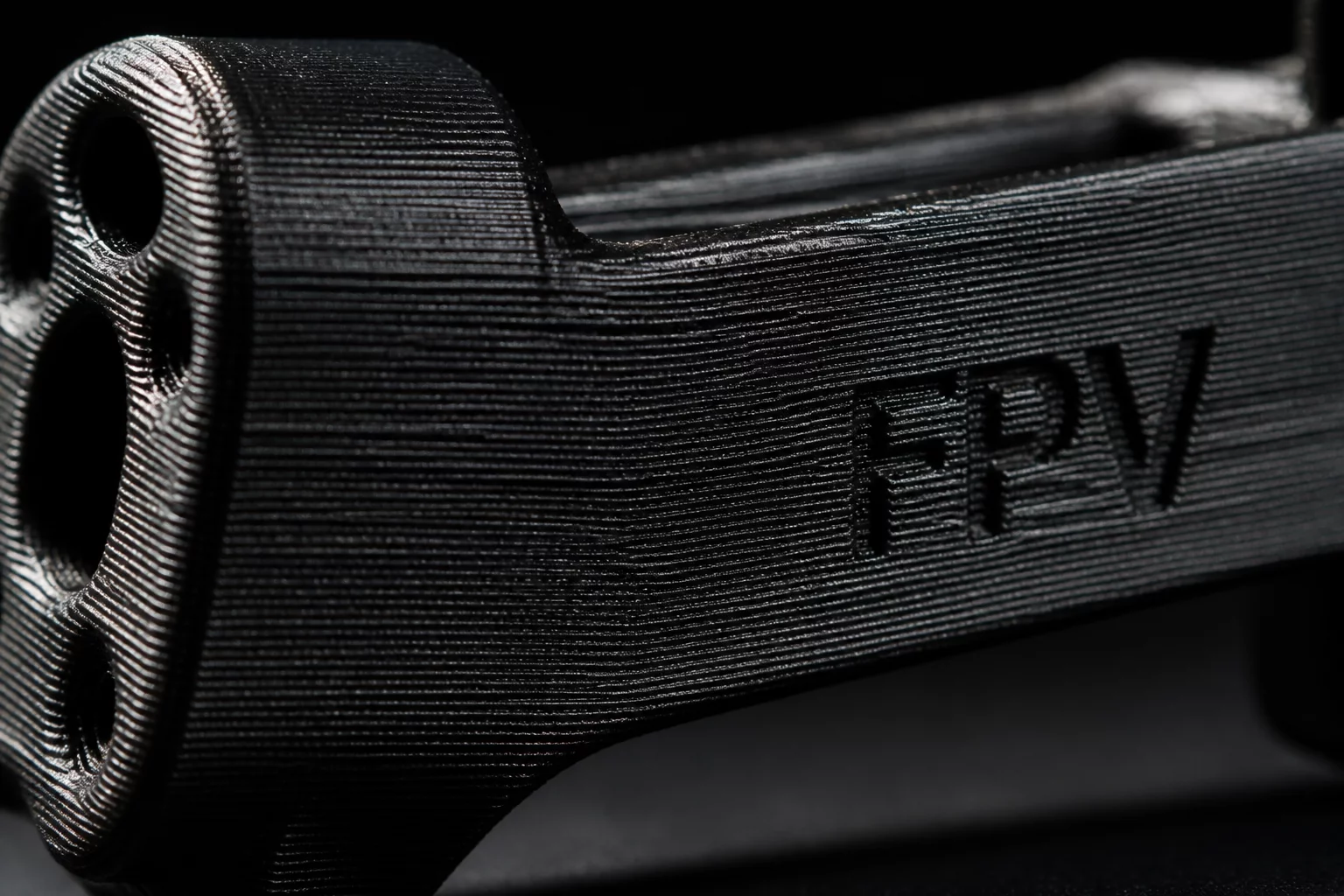
In the world of FDM 3D printing, the strength of a part is often dictated not by the material itself, but by how well the layers bond together. This case study focuses on a carbon fiber reinforced drone frame arm where layer adhesion is the critical failure point. When a drone experiences high-velocity maneuvers or crashes, the forces applied to the arms are immense. If the layers aren't fused perfectly, the arm will delaminate long before the material reaches its theoretical tensile limit.
We observed that at standard printing temperatures, the cooling fan often creates a localized thermal shock, preventing the newly deposited plastic from melting into the previous layer. This results in a "cold join" that looks perfect on the surface but offers zero structural resilience. The introduction of carbon fiber strands complicates this further, as the fibers can sometimes block the polymer chains from intertwining across the layer boundary. Our testing involved varying nozzle temperatures from 240°C to 260°C and reducing the cooling fan speed to find the "sweet spot" where the part maintains its shape without sacrificing the internal bond.
Ultimately, the frame arm printed at a higher temperature with minimal cooling showed a 40% increase in impact resistance. The trade-off was a slight decrease in surface finish quality on steep overhangs, which we deemed acceptable for a functional component where safety and durability are paramount. This iteration proves that for aerospace applications, thermal management is just as important as the geometry of the part itself.
Technical Iteration Analysis
Final Performance Verdict
The iteration demonstrated that increasing the extrusion temperature by just 10 degrees significantly reduced the risk of structural delamination. By carefully balancing the cooling parameters, we achieved a part that behaves almost isotropically under load. Future tests will explore the use of an enclosure to further stabilize the ambient temperature, which should theoretically push the adhesion limits even higher.