Carbon Fiber Reinforced PLA
A high-modulus composite designed for structural rigidity and a premium matte finish without the warping issues of traditional industrial plastics.
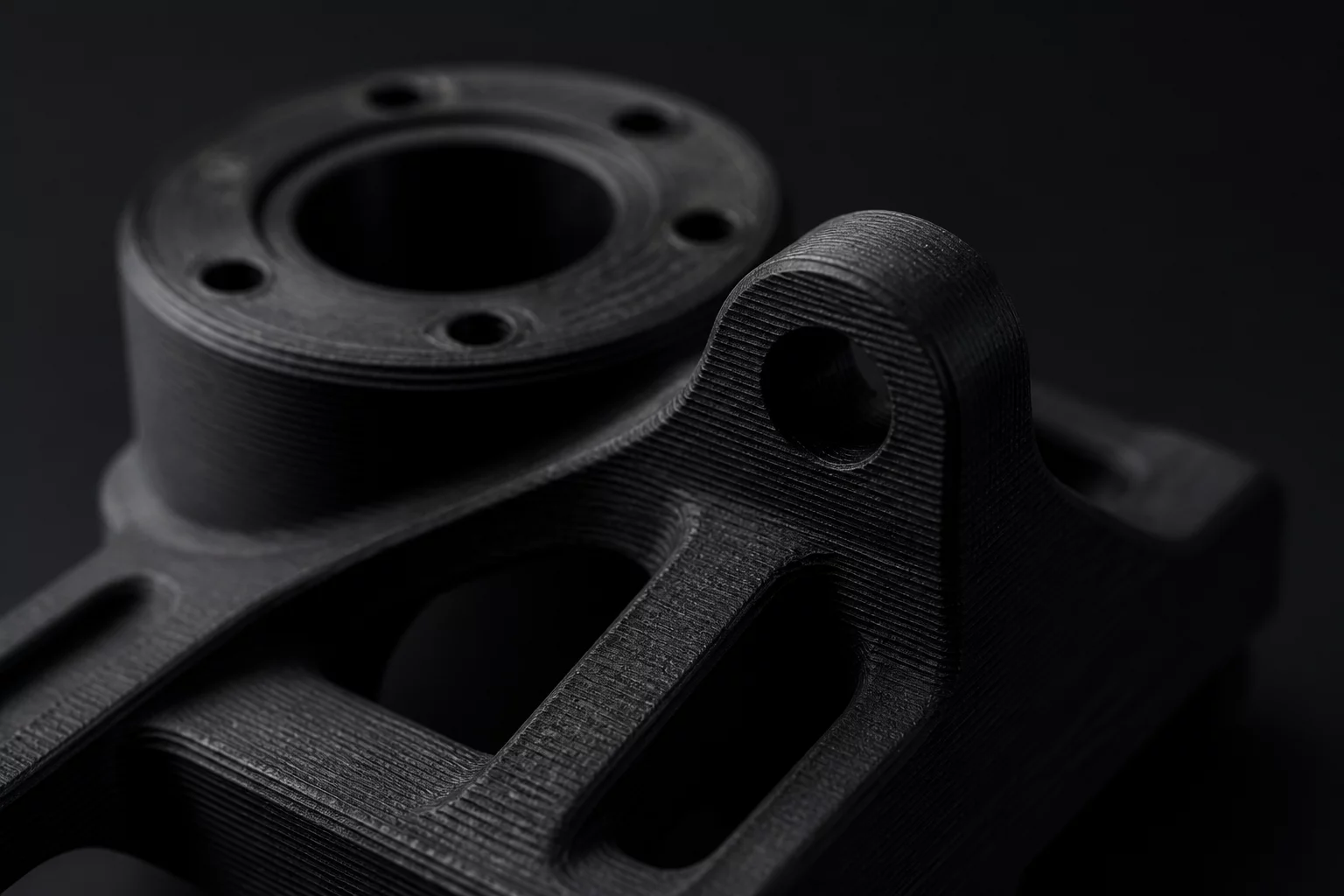
Carbon fiber reinforced PLA (CF-PLA) represents a significant leap for users who need structural rigidity without the headache of printing industrial polymers like Nylon or Polycarbonate. By infusing standard polylactic acid with small, chopped carbon fibers, the resulting filament gains a high tensile modulus. This makes it ideal for parts that must resist bending under load, such as mounting brackets, sensor housings, or drone frames.
The most immediate benefit during the printing process is dimensional stability. The fibers act as a structural skeleton within the molten plastic, drastically reducing the thermal contraction that leads to warping. While standard PLA is already easy to print, the carbon fiber variant feels even more stable on the build plate. However, this stiffness comes with a trade-off: the material is notably more brittle than standard PLA. It will snap before it bends, making it less suitable for high-impact applications where some elasticity is required to absorb energy.
One cannot overlook the aesthetic quality of CF-PLA. It produces a deep, matte black finish that diffuses light, effectively masking layer lines and minor surface imperfections. This makes it a favorite for final-use prototypes and high-end enclosures. Users must remember that these fibers are highly abrasive. A standard brass nozzle will be ruined after just a few hundred grams of filament. Upgrading to a hardened steel or ruby-tipped nozzle is mandatory for long-term success with this material. Furthermore, ensure your extruder gears are capable of handling the increased friction to avoid premature wear.