Glass Fiber PETG
A reinforced engineering material designed for high dimensional stability and structural rigidity in demanding industrial environments.
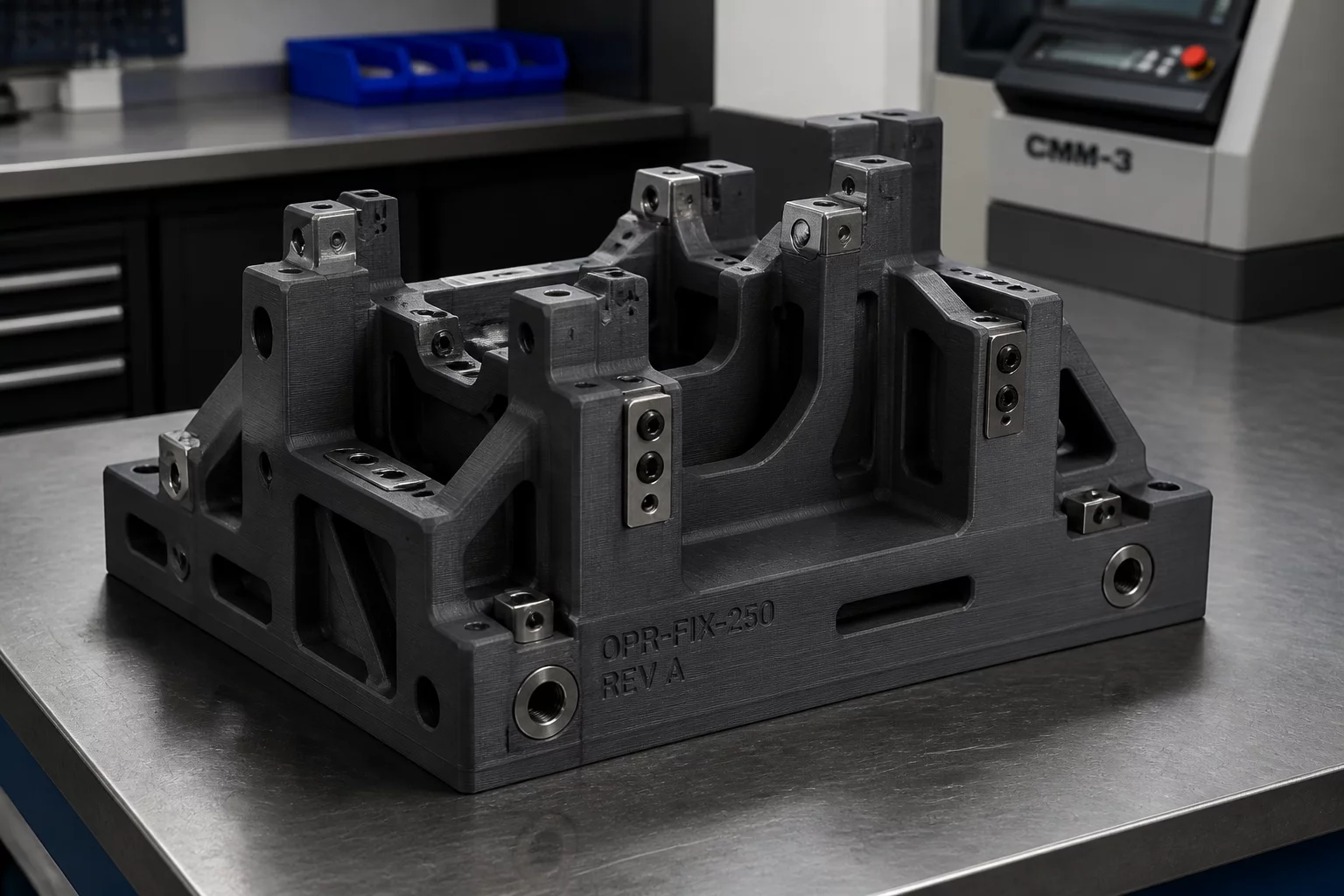
Engineering Strength Through Reinforcement
Glass Fiber PETG represents a significant evolution in the category of accessible engineering filaments. By incorporating micro-glass fibers into a high-quality PETG matrix, manufacturers produce a material that significantly outperforms its standard counterpart in terms of structural rigidity and dimensional accuracy. While standard PETG is known for its toughness and slight flexibility, the glass-reinforced version trades that elasticity for a high modulus of elasticity, making it ideal for parts that must resist bending under heavy mechanical loads.
One of the most noticeable improvements lies in the material's thermal stability. Standard polymers often suffer from shrinkage as they cool, leading to the dreaded warping effect on large-format prints. The glass fibers act as an internal stabilizer, physically preventing the polymer chains from contracting significantly during the phase transition from molten to solid. This characteristic allows engineers to print large industrial jigs and fixtures that remain perfectly flat, ensuring that alignment holes and mating surfaces meet strict assembly tolerances without the need for extensive post-processing.
Optimizing the Printing Process
Achieving successful results with Glass Fiber PETG requires specific hardware considerations. The most critical requirement is the use of an abrasion-resistant nozzle. Standard brass nozzles succumb to the abrasive nature of glass fibers very quickly, resulting in an enlarged orifice and ruined print quality within hours. Hardened steel, tungsten carbide, or ruby-tipped nozzles are the standard recommendation for this material. Furthermore, maintaining a dry filament is non-negotiable. Glass fibers can create microscopic channels that draw moisture deep into the filament core, leading to steam pockets during extrusion that compromise both surface finish and interlayer bonding strength.
For best results, keep the cooling fan at a lower setting—typically between 20% and 50%. Excessive cooling can lead to premature solidification of the layers before the glass fibers have a chance to bridge the interface, which negatively impacts the part's overall structural integrity. A slightly higher extrusion temperature than standard PETG, usually around 250°C, ensures the polymer flows smoothly around the fiber reinforcements, creating a dense and cohesive internal structure.
Practical Industrial Applications
The unique properties of Glass Fiber PETG make it a preferred choice for several professional sectors. In automotive prototyping, it is frequently used for under-the-hood components that require heat resistance and stiffness but do not reach the extreme temperatures requiring high-end polymers like PEEK. In the world of custom manufacturing, it serves as the primary material for assembly line guides and sensor mounts, where the matte, non-reflective finish is a secondary benefit that prevents interference with optical tracking systems. Its natural resistance to water and common chemicals further extends its utility to functional enclosures for marine and agricultural equipment.