Standard PLA Behavior
A detailed examination of thermal stability, mechanical stiffness, and printing nuances of the industry's most popular polymer.
Understanding Thermal Dynamics
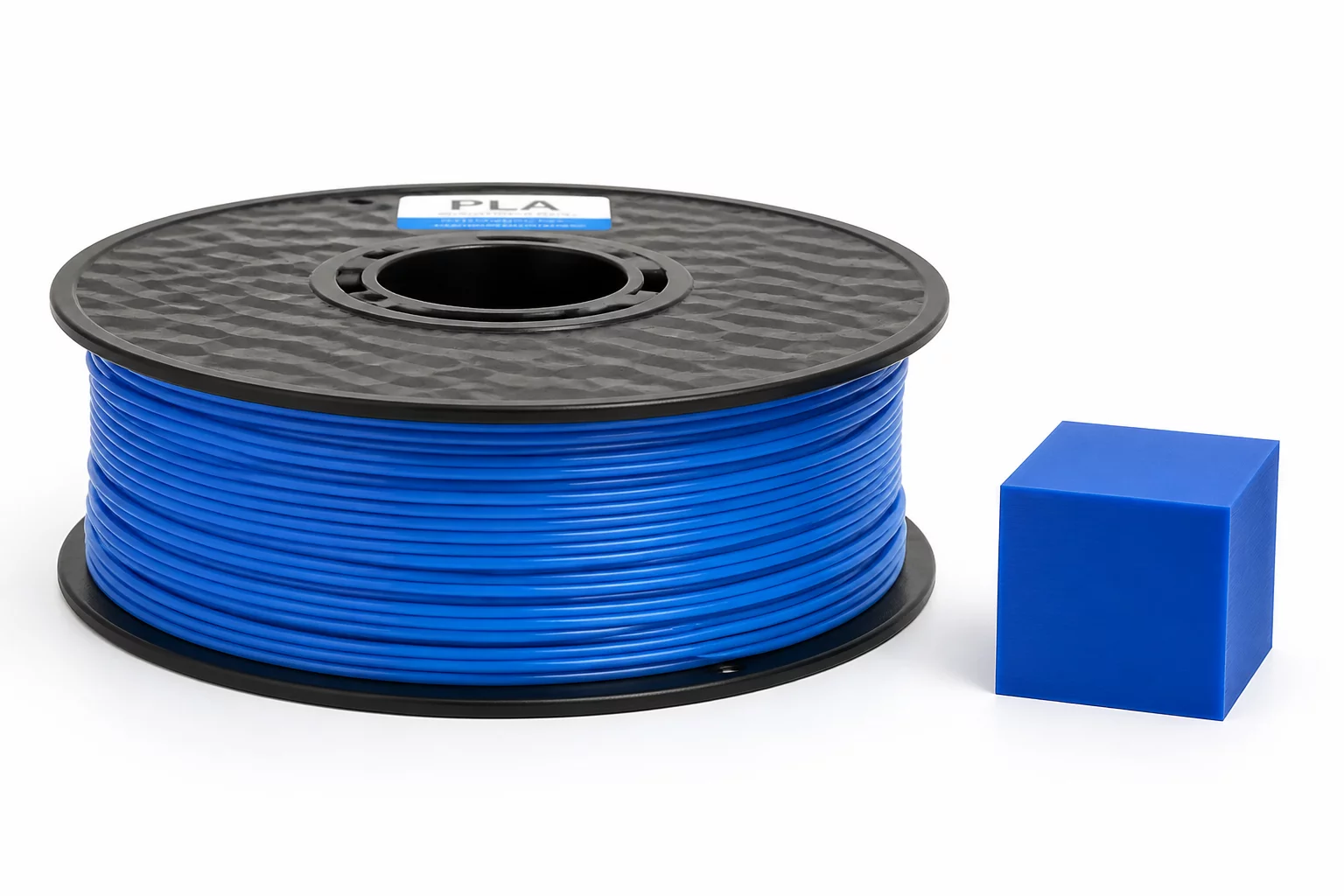
Polylactic Acid, commonly known as PLA, is a bioplastic derived from fermented plant starch such as corn or sugarcane. In the context of 3D printing, it is favored for its extremely low thermal expansion coefficient. This property minimizes the internal stresses that cause warping, allowing parts to remain flat even when printed on non-heated surfaces. However, its low glass transition temperature (approx. 60°C) means that its application is strictly limited to indoor or low-temperature environments where structural integrity won't be compromised by ambient heat.
Extrusion and Surface Quality
The flow characteristics of PLA are exceptionally consistent. It reaches a fluid state at moderate temperatures (190°C to 220°C), enabling high-speed printing without the significant risk of jamming associated with more abrasive or viscous materials. For aesthetic models, PLA is unparalleled; it reproduces sharp corners and intricate details with high fidelity. To maintain this quality, active part cooling is non-negotiable. Without rapid solidification, the plastic remains molten too long, leading to sagging on overhangs and poor vertical finish.
Mechanical Strength and Fragility
While PLA possesses impressive tensile strength and high stiffness, it is inherently brittle. Unlike tougher materials such as PETG or ABS, PLA does not deform much before breaking; instead, it tends to snap under sudden impact or high stress. This makes it ideal for rigid prototypes, casings, and non-functional visual models, but less suitable for mechanical parts subjected to vibration or heavy loads. Additionally, its hygroscopic nature requires dry storage to prevent degradation and brittle filament.
- Unmatched ease of use for rapid prototyping stages.
- Low environmental impact compared to petroleum-based plastics.
- High rigidity but low impact resistance.
- Significant sensitivity to moisture if left exposed.