PETG Stringing Profiles
Understanding the physics of PETG's characteristic ooze and how to optimize retraction and thermal settings for clean, hair-free prints.
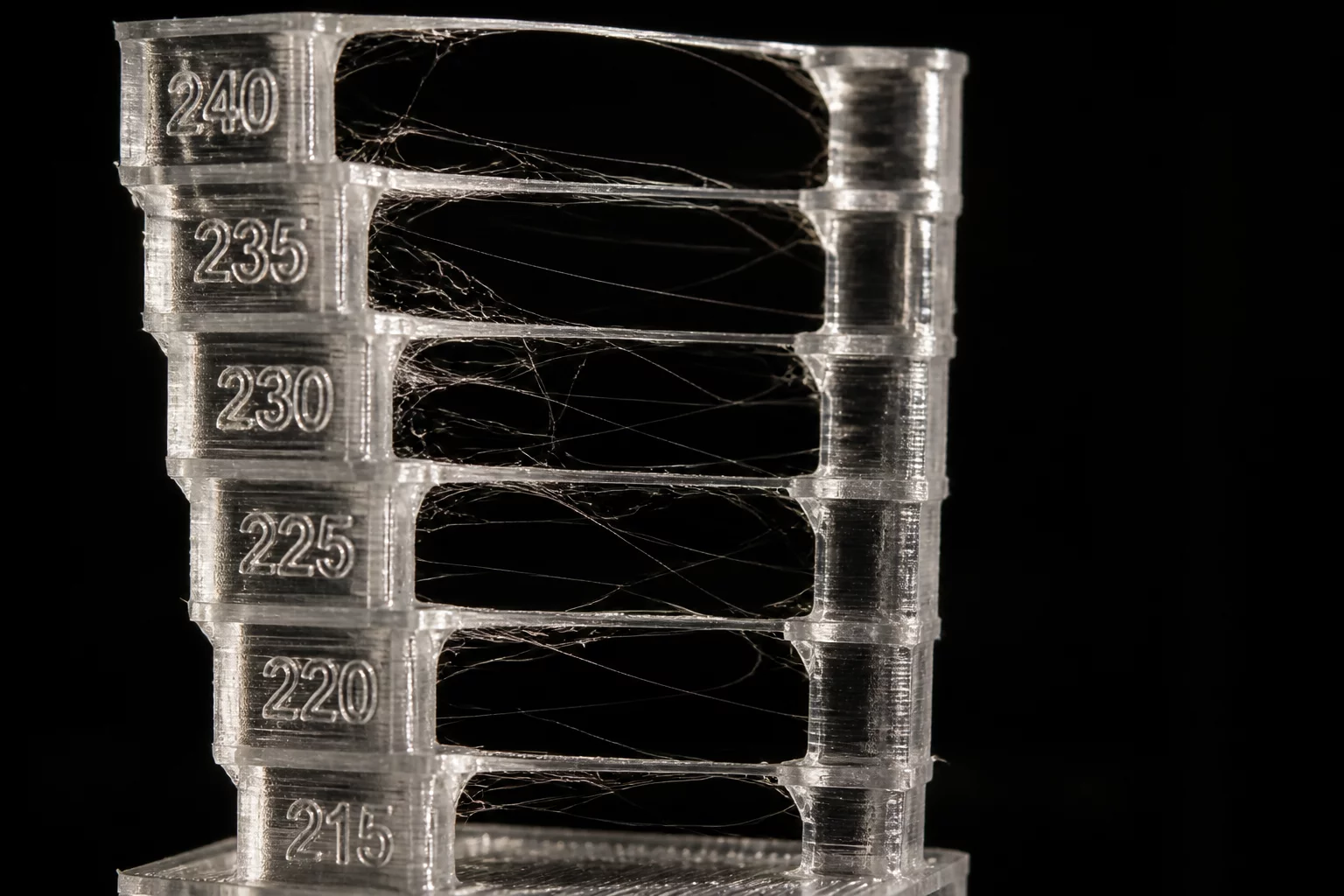
PETG (Polyethylene Terephthalate Glycol) has earned its reputation as the workhorse of desktop 3D printing, bridging the gap between the ease of PLA and the durability of ABS. However, its chemical nature makes it prone to one specific, frustrating defect: stringing. Unlike PLA, which snaps cleanly at the nozzle, PETG remains viscous and tacky, leaving behind fine, hair-like fibers as the print head moves between separate geometries.
The primary culprit behind excessive stringing is PETG's tendency to absorb moisture from the air. Damp filament expands in the heater block, creating internal pressure that forces molten plastic out of the nozzle even when the extruder motor has stopped. Before adjusting slicer profiles, ensure the filament has been dried for at least 6 hours at 65°C. This simple step often solves more problems than complex slicer adjustments ever could.
Once the material is dry, the profile optimization begins with retraction. For direct-drive extruders, a retraction distance between 0.8mm and 1.5mm is usually sufficient. Bowden systems require significantly more, often ranging from 3mm to 6mm. Speed is equally critical; retracting too slowly allows the plastic to ooze, while retracting too fast can grind the filament or introduce air bubbles into the nozzle. Most professional profiles settle around 35mm/s to 45mm/s for the retraction speed.
Temperature management serves as the final pillar of stringing control. While higher temperatures improve layer adhesion and transparency, they also increase the fluidity of the melt. Reducing the printing temperature by just 5°C can often resolve minor wisping without sacrificing structural integrity. It is always recommended to run a specialized temperature tower for every new brand of PETG to find the specific sweet spot where flow and surface quality intersect. Furthermore, enabling Z-hop only when necessary and adjusting the travel speed to be as high as the machine safely allows will minimize the time the nozzle spends over empty space, giving the plastic less opportunity to seep out.