Nylon Moisture Absorption
Controlling hygroscopic behavior to ensure structural integrity and surface quality in professional polyamide prints.
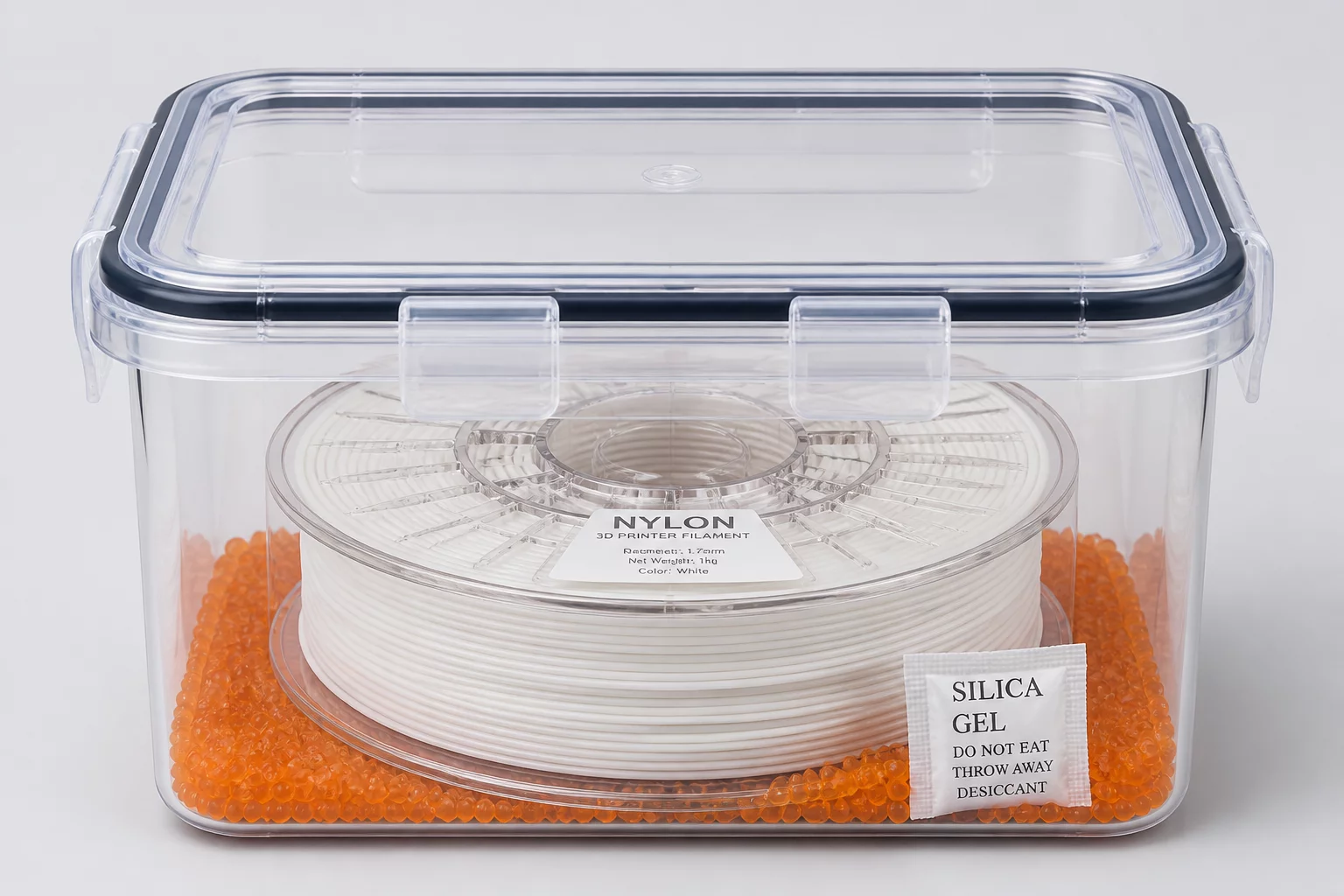
Nylon, or Polyamide, is celebrated for its incredible toughness and chemical resistance, yet it possesses a highly hygroscopic nature that can turn a precision print into a failed experiment within hours. Unlike PLA or ABS, Nylon acts like a sponge, absorbing moisture directly from the ambient air. When this saturated filament reaches the hotend, the trapped water molecules instantly flash into steam. This expansion causes audible popping and crackling during extrusion, resulting in severe surface defects such as pitting, excessive stringing, and a fuzzy, matte finish that compromises both aesthetics and dimensional accuracy.
The Mechanical Impact of Hydrolysis
Beyond surface irregularities, the real danger of printing with wet Nylon is hydrolysis. At the high temperatures required for extrusion, the water molecules react chemically with the polymer chains, breaking them into shorter segments. This degradation is irreversible and results in a significant loss of tensile strength and impact resistance. A part printed with wet filament may look acceptable to the naked eye but will fail prematurely under mechanical load. It is this hidden structural weakness that makes moisture management the single most critical factor in professional Nylon manufacturing.
Effective Drying and Storage Protocols
Successful iteration requires a disciplined approach to material preparation. Relying on vacuum-sealed bags from the manufacturer is not enough, as moisture can permeate the packaging over time. We recommend a dedicated filament drying cycle—typically 12 to 24 hours at 70°C to 80°C—prior to any critical print. Once dried, the spool must be transferred immediately to an airtight dry box. For long-duration prints, the filament should be fed directly from the dry box to the extruder through a sealed PTFE tube to prevent re-absorption during the printing process itself.
- Pre-Print Dehydration: Mandatory 12+ hour cycle at 75°C.
- Active Storage: Use of silica gel or molecular sieve in airtight containers.
- Weight Tracking: Measuring spool weight gain over time to detect saturation levels.
- Visual Indicators: Monitoring for steam, bubbling, or unusual stringing patterns.