TPU Shore Hardness
Evaluating the spectrum of flexibility in Thermoplastic Polyurethane for functional engineering applications.
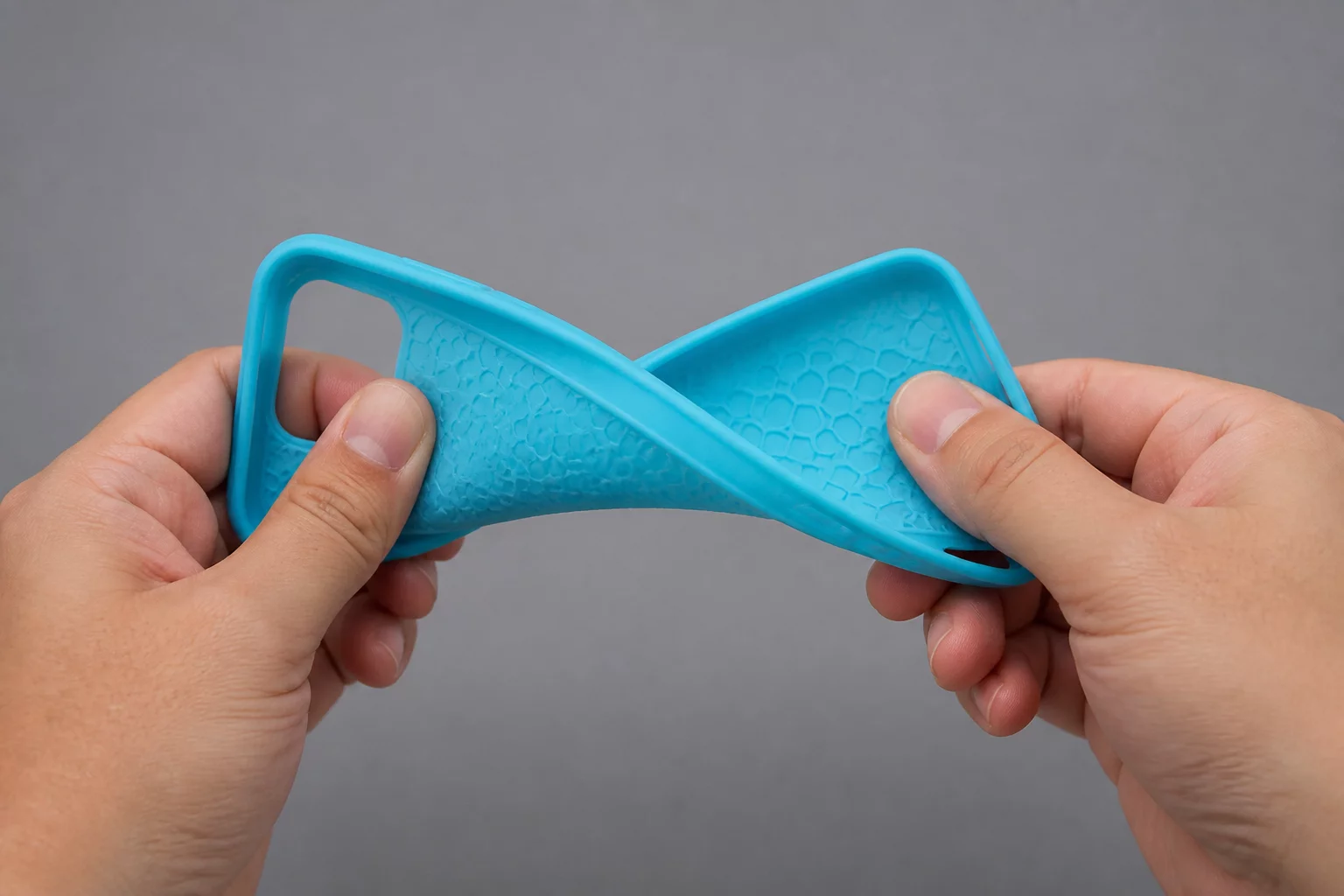
Thermoplastic Polyurethane (TPU) is often categorized by its "Shore hardness," a measurement that defines its resistance to indentation. In the context of 3D printing, this rating determines everything from the ease of extrusion to the final tactile response of the printed object. Unlike rigid materials like PLA or ABS, TPU behaves as an elastomer, meaning it can undergo significant deformation and return to its original shape.
The Shore A vs. Shore D Scales
Most flexible filaments utilize the Shore A scale. A common rating like 95A feels similar to the tread of a hard rubber wheel, offering a balance between flexibility and ease of printing. Lower ratings, such as 85A or 75A, provide a much softer, more rubber-band-like consistency. These softer grades often require specialized direct-drive extruders, as the filament can easily buckle inside the feeding mechanism of a Bowden setup.
When high-impact resistance is needed alongside a degree of flex, Shore D materials come into play. These are significantly stiffer and are typically used for industrial components that must withstand abrasion while retaining structural integrity under load.
Influence of Geometry on Perceived Hardness
It is a common misconception that the material's Shore rating is the only factor in part flexibility. During our iterative reviews at PartTrace, we have observed that wall thickness and infill patterns can override the base material properties. A 95A TPU part with a 5% gyroid infill can feel significantly softer than an 85A part printed with solid walls. This interaction makes TPU a versatile choice for designers who need to fine-tune mechanical damping or grip without switching materials mid-project.
Extrusion Challenges and Calibration
Printing TPU is a lesson in friction management. Because the material is elastic, retraction settings must be carefully tuned to prevent stringing without causing jams. Slower print speeds—often between 20mm/s and 40mm/s—are standard to ensure consistent flow. Furthermore, TPU is highly hygroscopic; moisture absorption can lead to bubbling and poor layer adhesion, making a dedicated dry box essential for long-term reliability.