Wood Fill Extrusion
Evaluating the balance between organic aesthetic and technical printability in composite wood filaments.
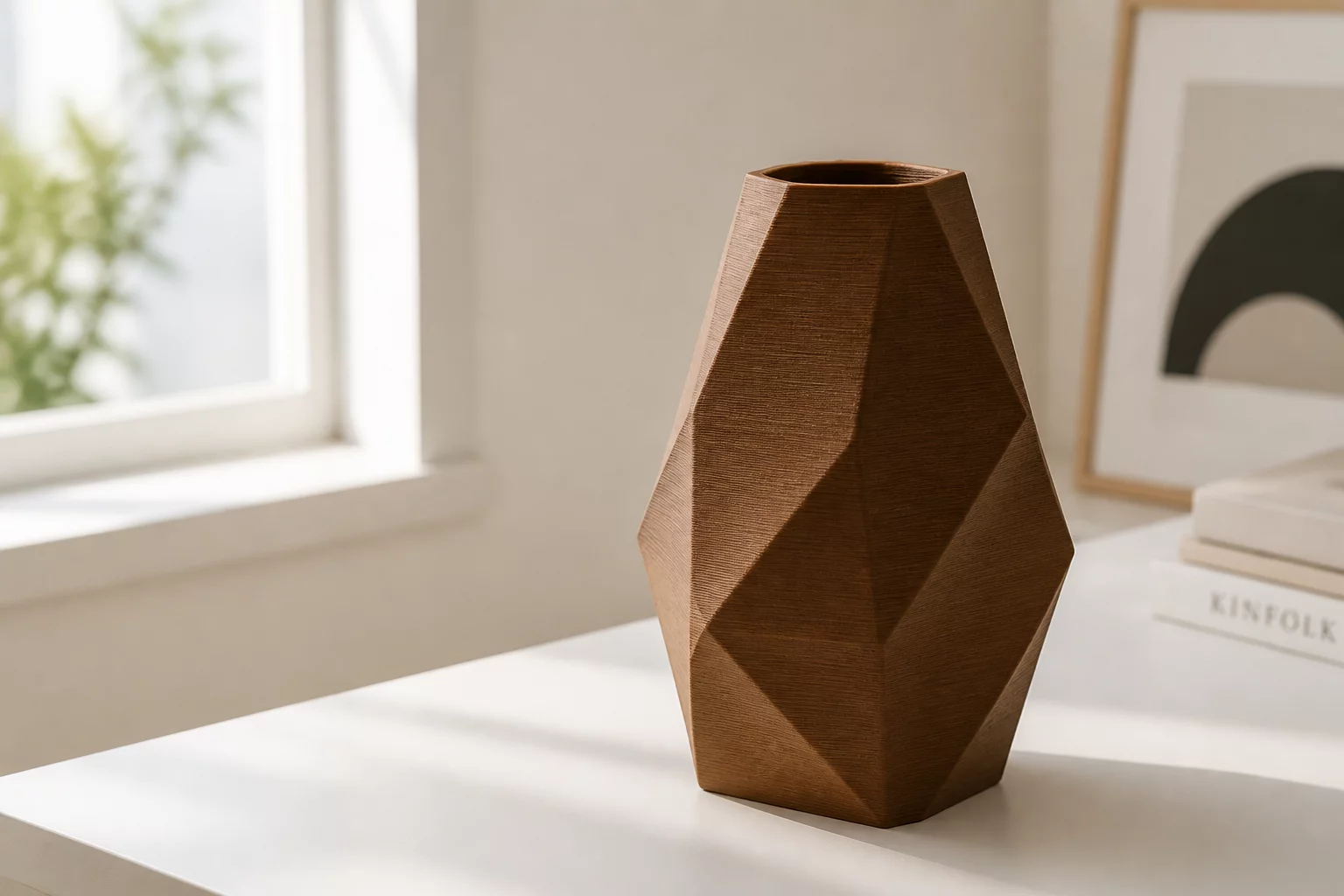
The Nature of Wood-Fiber Composites
Wood-fill filaments are specialized composite materials that blend a thermoplastic polymer—usually Polylactic Acid (PLA)—with real wood fibers. The fiber content typically ranges from 15% to 40% by weight, depending on the desired visual density and structural integrity. Unlike standard plastics, these fibers do not melt during the extrusion process; they remain suspended in the molten polymer. This creates a unique tactile surface finish and an organic aroma that mimics real timber, making it a premier choice for architectural models, decorative vases, and prop making.
Technical Challenges in the Hotend
The presence of solid fibers introduces specific mechanical risks, most notably the increased likelihood of nozzle clogs. While a standard 0.4mm nozzle may work for short durations, the fibers tend to accumulate and clump at the tip, eventually causing a full blockage. Reliability is significantly improved by switching to a 0.6mm hardened steel nozzle. Furthermore, wood-fill materials exhibit higher oozing and stringing tendencies compared to pure PLA. The fibers act as a wick, drawing molten material out of the nozzle even when retraction is active. Tuning travel speed and cooling fan intensity is essential to manage these artifacts without compromising layer adhesion.
Sanding and Staining Potential
The true value of wood-fill lies in its post-processing versatility. Unlike homogeneous plastics, wood-fill parts can be sanded with traditional wood sandpaper, effectively erasing layer lines and creating a smooth, natural feel. Because the material contains actual cellulose, it responds to wood stains in a manner similar to raw lumber. Applying a stain allows the user to achieve various shades, from light pine to deep mahogany. Additionally, varying the extrusion temperature during the print can subtly char the fibers, allowing for the creation of simulated wood grain patterns directly on the printed surface.